
Your Spreadsheet Is Begging to Be an App
Every business has The Spreadsheet. Tabs on tabs, a rainbow of highlighting, and one person who knows which cells not to touch. We need to talk about it.
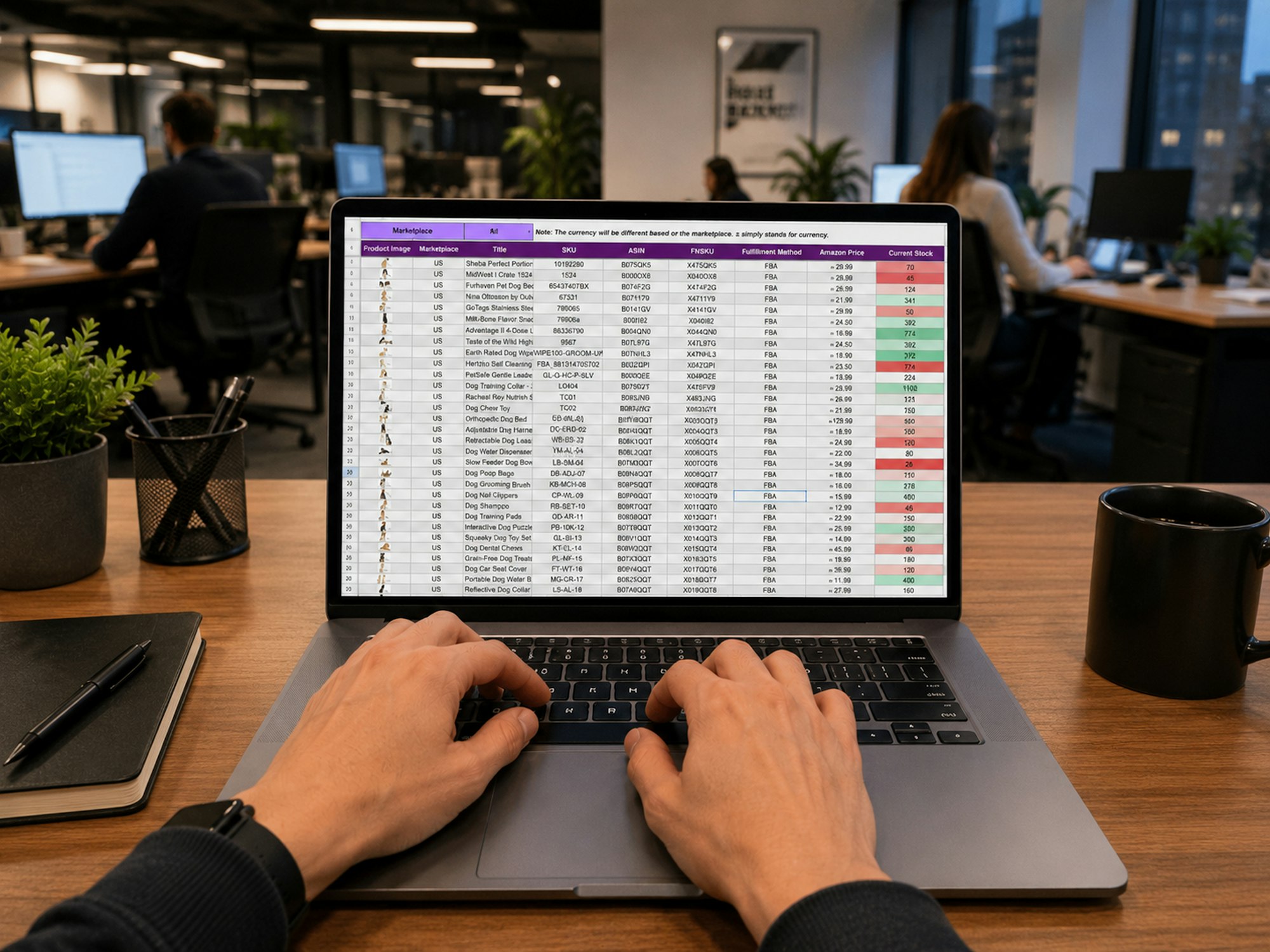
We love spreadsheets. Really.
Spreadsheets are how most good ideas start. They're flexible, everybody can open one, and they cost nothing. If yours works, keep it. But spreadsheets were built for one person crunching numbers, and plenty of businesses are now running their whole operation out of one.
Signs your spreadsheet wants a promotion
- There's more than one version. "Final," "final v2," and the one someone emailed last Tuesday.
- You copy and paste between tools. Orders from one system, contacts from another, all retyped into the sheet.
- Only one person really understands it. When they go on vacation, everyone holds their breath.
- "Who changed this?" has no answer.
- Everyone can see everything. The new hire and the bookkeeper get the same view, including the columns nobody should share.
- It's miserable on a phone. Which is exactly where you are when someone asks.
What an app does that a spreadsheet can't
A custom app is your spreadsheet's grown-up sibling. Same information, but with structure, permissions and automation built around how your business actually works.
- Each person sees what they need, on a screen designed for their job.
- Data arrives on its own from the tools you already use, instead of being retyped.
- Every change has a record of who made it and when.
- It can warn you about a problem before you'd ever spot it in a cell.
Under the hood Your spreadsheet's tabs become tables in a real database (we use Supabase, which runs Postgres). Columns get types, so a date is always a date and a total is always a number. Rows link to each other instead of being copied, which is how you end double entry. Row-level security decides who can read or change each row, and the screens are built with Next.js and React so they work on a phone as well as a desktop.
The Blackwood story
Blackwood Land Institute is a farm-based nonprofit near Houston, and a small team runs a lot of it: Nature Camp, Farm School, school and group visits, open farm days and a full calendar of public events. Events live in Eventbrite, the newsletter lives in Constant Contact, and website forms come in from every direction.
That's a lot of browser tabs. So under a full partnership, after we rebuilt their website on Webflow, we built the team an app of its own at app.blackwoodland.org, in the same colors as the website. The team signs in and sees:
- A form submissions inbox, so website inquiries don't scatter across email
- Ticket sales tracked against each event's target
- An early warning when an event needs a push
- A guest list for every event
The numbers that matter are on one screen, and events appear on the website without anyone typing them twice. Next on the roadmap are school accounts and registrations, built on the same foundation. Read the full case study.
"Isn't custom software expensive?"
Usually, yes. A custom app often costs around $100,000 to build, then $2,000 to $8,000 a month to keep running. That price tag is why so many businesses stay stuck in spreadsheets.
Our full partnership changes the math. The app layer is included with no build fee, alongside your website, hosting, SEO and AEO, analytics and ad optimization, starting at $2,500 a month. It's your own software, customized to your industry and your business, in accounts you own (more on that in who actually owns your website). For the bigger idea behind it, read one source of truth.
When to keep the spreadsheet
If it's one person, a handful of rows and nothing ever breaks, keep it. We'll tell you so. The app is for when the spreadsheet has quietly become the business.
Got a spreadsheet that's begging? Show it to us. The consult is free, and we promise not to judge the color coding.